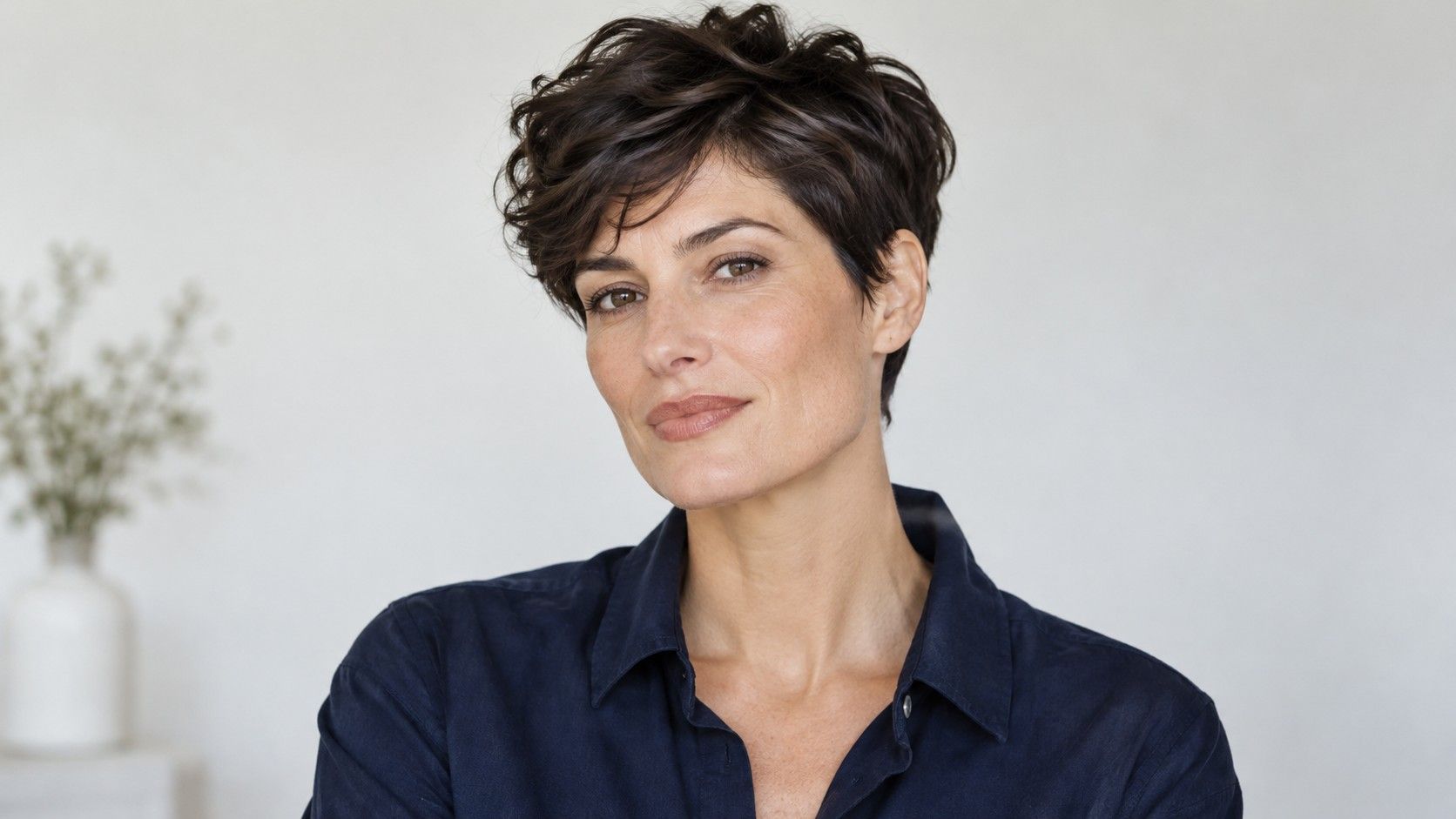
Short hair makes the outline around the ears, cheekbones and jaw easier to see. That can be exactly the appeal. A pixie, close crop or longer top does not need to compensate for a square face; it needs a shape you enjoy and can maintain. Before choosing a photograph, decide how much hair you want at the sides, how the top should move and what you expect it to do after a normal wash.
Keep the jaw visible on purpose
With less hair beside the face, the jaw becomes part of the overall silhouette. Compare an ear exposing crop with a longer shape that brushes the cheeks. The first gives a clearer view of the face; the second keeps some framing movement. Neither effect is more correct. If you like your angular outline, say so directly so the consultation does not automatically become a discussion about hiding it.
Use a mirror to check the front and profile with your hair pinned close at the sides. This cannot reproduce a pixie, but it helps you judge exposed ears, temples and neck. Look in your usual posture rather than lifting your chin. A close crop also shows the hairline and growth patterns that longer hair covers, so ask the stylist to inspect those areas before suggesting a precise edge.
Face length matters alongside jaw width. A square face can be compact or elongated, and tall volume at the top changes those proportions differently. If a reference looks appealing, identify whether you like the visible jaw, the fringe or the side shape. A broad request for “short hair for a square face” leaves several important choices unresolved.
Compare crown height with weight at the sides
A longer top with closely cut sides concentrates the visual weight above the forehead. It can create a taller outline, particularly when styled upward. If your face already looks long to you, you may prefer a lower top or more movement toward the sides. Height is an option, not a standard requirement for an angular jaw.
Side weight changes the balance even within a pixie. Hair sitting over the upper ears creates a fuller frame than a tight taper. A small amount of length at the temples can soften the transition between top and side, while an exposed temple makes the structure clearer. Ask to see the intended side length with a comb or fingers before it is removed.
The crown has its own growth pattern. A whorl can leave a short section standing up, while a longer section may lie flatter under its own weight. Discuss how the top behaves when air dried and how much lift comes from cutting versus styling. A salon photograph with carefully placed product can conceal the daily effort required to maintain that volume.
Compare profiles as well as front views. A high top and very short back can create a strong slope; a fuller back makes a different silhouette. You may like both, but the shape around the occipital area and nape should be deliberate. Bring a side view reference if the back matters to you, rather than letting one front photograph represent the entire haircut.
Use fringe length to control the front outline
A short fringe leaves more forehead visible and keeps the eyes clear. A longer fringe offers sweeping, separating or pushing back options, but it can fall forward during the day. Consider which movement you will tolerate. If you repeatedly tuck long hair away now, a long pixie fringe may preserve the same annoyance in a shorter haircut.
A diagonal sweep introduces asymmetry, while a firm straight edge echoes the horizontal lines elsewhere in the face. A broken edge creates smaller pieces and a less continuous boundary. These are visual choices to test, not instructions attached to a face shape. Try arranging your existing front section in each direction and notice the effect around the eyes and temples.
When researching a pixie cut for square face proportions, pay attention to the shortest front point. A reference with a long top may include very short pieces above one ear that are easy to overlook. Ask which sections will be short enough to reveal scalp or hairline, and whether the fringe can be worn without the exact part in the picture.
Glasses deserve a practical test. The arms can lift hair at the temples, while a heavy fringe may sit on the top of the frame. Put your usual pair on during the consultation. If you alternate between glasses and contact lenses, compare both appearances mentally and choose enough flexibility that the haircut does not depend on one accessory.
Work with fine, dense and curly hair
Fine hair can look more substantial when a short cut keeps a clear perimeter and avoids removing too much from the ends. That does not mean it must be blunt everywhere. Small textured sections can give movement, but extensive thinning may make the front separate more than you like. Ask how the proposed cut will preserve coverage in the areas that matter to you.
Dense hair may build width above the ears or at the back as it dries. A controlled taper can reduce that bulk, while a fuller crop can use it as part of the shape. Discuss whether weight removal will leave short pieces that expand. The amount taken out should relate to your desired silhouette and texture, rather than treating thick hair as something that always needs thinning.
Curly short hair needs allowance for spring and variation across the head. A top curl may stand higher than the side curls, and a shorter front can finish well above the planned point. Ask for the final shape to be assessed dry in the texture you normally wear. If you arrive with straightened hair, bring a clear photograph of its usual curl pattern.
Growth patterns at the nape and temples can be particularly visible in a close cut. A sharp outline may require regular tidying; a less rigid edge may accommodate growth differently. Point out any area that usually sticks out. A stylist can discuss working with the direction rather than promising that a new length will make every strand lie flat.
Separate quick drying from low maintenance
Short hair often dries faster because there is less length holding water, but the outline can need frequent attention. A precise crop may look different after a modest amount of growth, while a looser pixie can evolve more gradually. Ask which section will need reshaping first and how often the stylist expects you to return for the look you selected.
At home, learn a simple routine for the roots and front. A small change in drying direction may matter more than a large amount of product. Ask the stylist to show an everyday finish without relying on a long sequence of tools. If you will usually air dry, make that clear before the cut so the plan reflects the natural behavior of the hair.
Product can separate a crop into defined pieces, flatten it or build texture depending on the formula and amount. Start with the quantity demonstrated for your density rather than copying a routine from someone with different hair. Consider whether you like touching up the shape during the day. A style that needs constant adjustment may feel less convenient than the longer hair you are replacing.
Agree on a grow out plan before the cut
Ask what the shape will become as the top, sides and nape lengthen. A very short side may take time to meet a long fringe, while the back can reach a length you dislike sooner. Discuss whether your next appointment would maintain the crop or guide it toward a longer pixie. This makes the decision feel more concrete than a vague assurance that hair grows back.
If you are moving from long hair and feel uncertain, a staged change can be useful. You might first choose a longer pixie with tuckable front pieces, then shorten the sides once you know how you feel with the jaw exposed. This costs another appointment and may not suit everyone, but it offers a practical way to explore the outline without making every change at once.
Before leaving, check the back with a mirror, move the fringe and put on your glasses. Ask how to refresh a flattened crown after sleep and what to do when the sides begin projecting. Take photographs after the first home wash so the next consultation can focus on real behavior. The right short haircut is the one whose proportions and upkeep fit your preferences, with room to revise them.