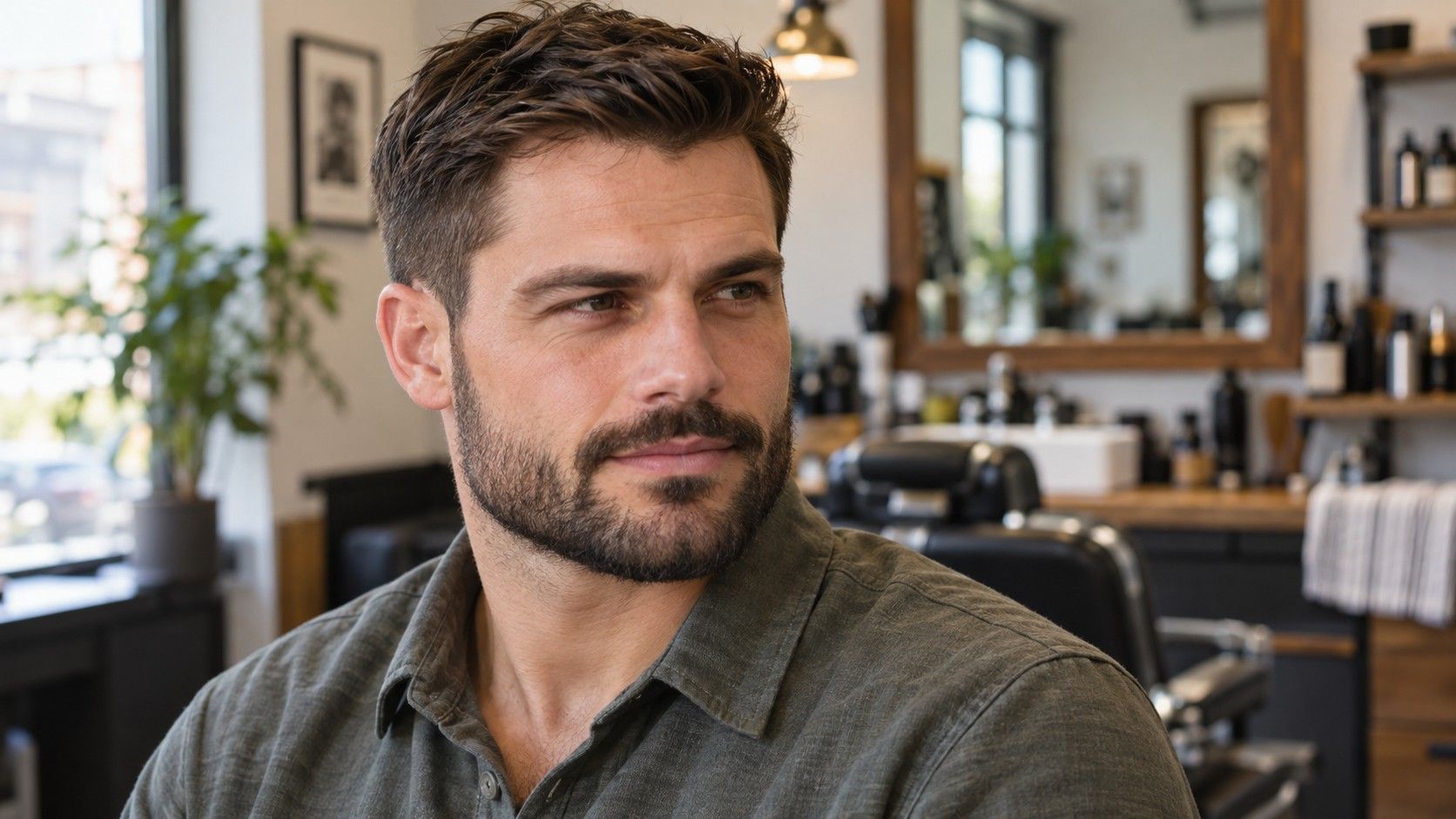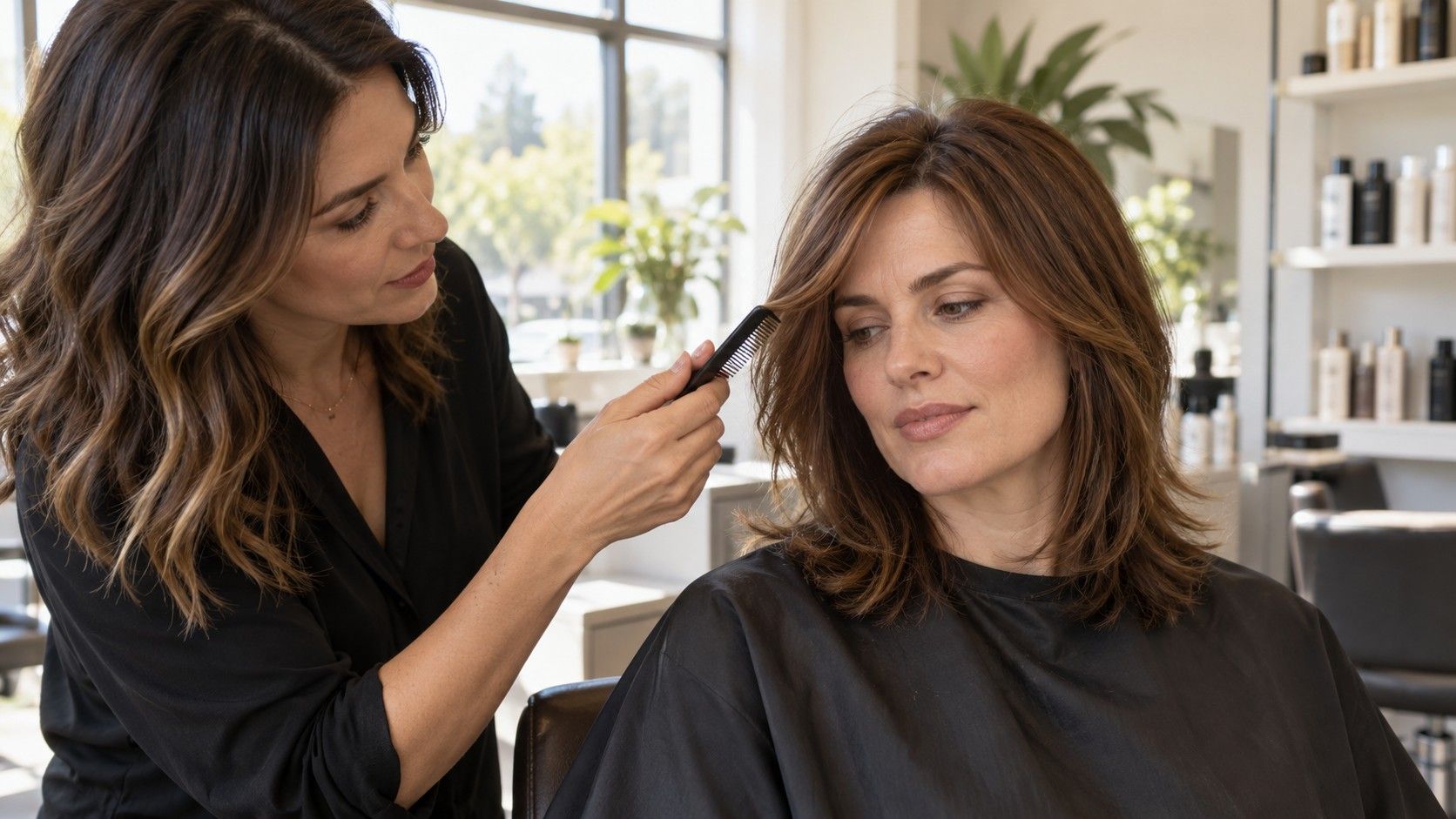
A square face can look striking with an exposed jaw, a curved outline, a close crop or long straight hair. The useful question is where you want the eye to settle. Haircuts for square faces become easier to compare when you separate three decisions: where the perimeter ends, where the shortest pieces fall, and where the hair holds its volume. Start with the effect you enjoy, then check whether your texture and routine can deliver it.
Choose whether to soften or emphasize the jaw
Stand in front of a mirror with your hair loosely pulled back, then release one side. Notice whether you prefer the clean, visible line of your jaw or the interruption made by hair crossing it. Neither preference needs correcting. A crisp chin length cut can echo an angular outline; longer pieces passing below the jaw can create a different frame. These are visual effects, not rules about which face is acceptable.
Face length changes the comparison. Someone with a broad, relatively short face may want less width beside the cheeks, while someone with a longer square outline may enjoy a fuller shape there. Crown height can make the outline appear taller, but it may feel excessive if the face already looks long. Check forehead width, cheek width and jaw width together instead of choosing from a jawline alone.
Use a front photograph taken at eye level and a second view from the side. Keep your expression and camera distance similar. A close phone selfie can distort the proportions you are trying to judge. Compare your own hair in two arrangements before relying on a celebrity reference: pinned behind the ears exposes angles, while a loose front section shows what framing would actually cover.
Place the shortest face framing pieces deliberately
A layer that stops at the cheekbone directs attention higher than one that ends near the jaw corner. A piece that extends below the chin gives more flexibility for tying the hair back. Point to the intended landing place while your hair is dry. Saying “soft layers” leaves the stylist to guess both the length and the amount of hair you want removed.
Check the shortest piece in its natural position, not while it is stretched forward. Waves and curls can spring upward after drying, and the two sides may settle differently. Ask the stylist to allow for that movement and to assess the final shape dry. If the front curls turn outward at the jaw, a slightly longer section or a different curl grouping may change the outline more than adding another layer.
Think about what happens when the front is tucked behind an ear. A face frame that looks graceful loose may produce a small projecting tail when tucked. If you wear glasses or headphones every day, test that position in the chair. For a practical starting point, leave enough length to tuck or clip the front, then shorten it at a later visit if you consistently want it freer.
Match volume to the way your hair grows
Density and strand thickness are separate considerations. Fine strands can still form a dense head of hair, while coarse strands may be relatively sparse. Long layers can release movement in dense hair, but extensive layering may leave a fine perimeter looking thin. Ask what the proposed cut will do to the ends as well as to the area beside your face.
With straight hair, a blunt edge makes the perimeter easy to see. A softly textured edge breaks that line into smaller sections, although it can require styling to look intentional. Wavy hair may build width as it dries, particularly around shorter layers. Curly hair needs room for its own pattern; removing bulk without considering curl groups can leave unexpected gaps or a wider shape in a different place.
Discuss the crown and temples separately. A cowlick may resist the smooth part shown in a reference picture. Flat roots at the crown do not necessarily need a shorter layer if a change of part or drying direction supplies enough lift. Conversely, a cut designed around a round brush blowout may collapse into a much wider, lower outline when air dried. Ask to see how the haircut will behave with your usual method.
Compare lengths by what they let you do
Short hairstyles for square face shape can reveal the jaw and cheekbones clearly. A pixie with a longer top offers movement and different parting options, but the outline around the ears and nape will need attention as it grows. A short cut is not automatically easy to maintain: it may dry quickly while demanding more frequent appointments to keep a precise shape.
At shoulder length, check whether the ends hit the shoulders and flick outward. That movement can be attractive, but it may conflict with a smooth reference photograph. A cut slightly above or below that contact point behaves differently. Longer hair gives room for a ponytail and a gradual face frame, yet heavy length can pull waves down or make a dry, uneven perimeter more obvious.
| Priority | Useful detail to discuss | Tradeoff to check |
|---|---|---|
| Keep the jaw visible | Tucked sides or a clear short outline | How the ears and sideburn area are exposed |
| Change the frame easily | Longer front pieces and a flexible part | Whether those pieces stay out of the eyes |
| Wear a ponytail | Minimum tie back length at the front and nape | Loose layers that escape the band |
| Air dry most days | Perimeter checked in natural texture | Shape changes between wet and fully dry hair |
Discuss the routine before agreeing to the cut
Describe an ordinary morning accurately. If you wash at night, sleep on damp hair and have five minutes before leaving, say so. A smooth curtain shape that requires a dryer and brush every morning may be a poor match even if the photograph is appealing. Ask the stylist to identify the minimum steps, the tools involved and which parts of the result depend on heat styling.
Maintenance includes more than time at home. A sharp perimeter shows growth sooner than an intentionally loose layered shape. Fringe can need adjustment before the rest of the haircut. Instead of accepting a universal trim schedule, ask when this particular outline is likely to lose its intended proportions and whether a small interim tidy would be sufficient.
Also mention exercise, work requirements and sensory preferences. Hair touching the cheeks can feel irritating, while a very short nape may feel unfamiliar under a collar. Test the proposed front length with your normal glasses and consider whether you need every section secured for work. A practical compromise is often a slightly longer first version, with the option to refine it after living with the shape.
Give the stylist concrete instructions
Choose two or three reference photographs with hair similar to yours in density and texture. Name the part you like in each: the open jaw, the curved front, the full ends or the height at the crown. Include one example of a result you would dislike and explain why. “I do not want thin ends” communicates more than a broad request for a flattering haircut.
A useful consultation might sound like this: “I want my jaw visible, enough front length to tuck behind my ears, and a perimeter that works without straightening. I can use a dryer occasionally, but I usually air dry.” That gives the stylist a visual aim and real constraints. Ask them to show the shortest point and the amount of length coming off before cutting begins.
After the cut, check the front, profile and back with your hair in its everyday position. Try the tuck or tie you discussed. Take a photograph if you want a record for the next appointment, then note what happens after your first home wash. The most useful next adjustment comes from how the haircut behaves on your head, rather than from whether it follows a face shape chart.