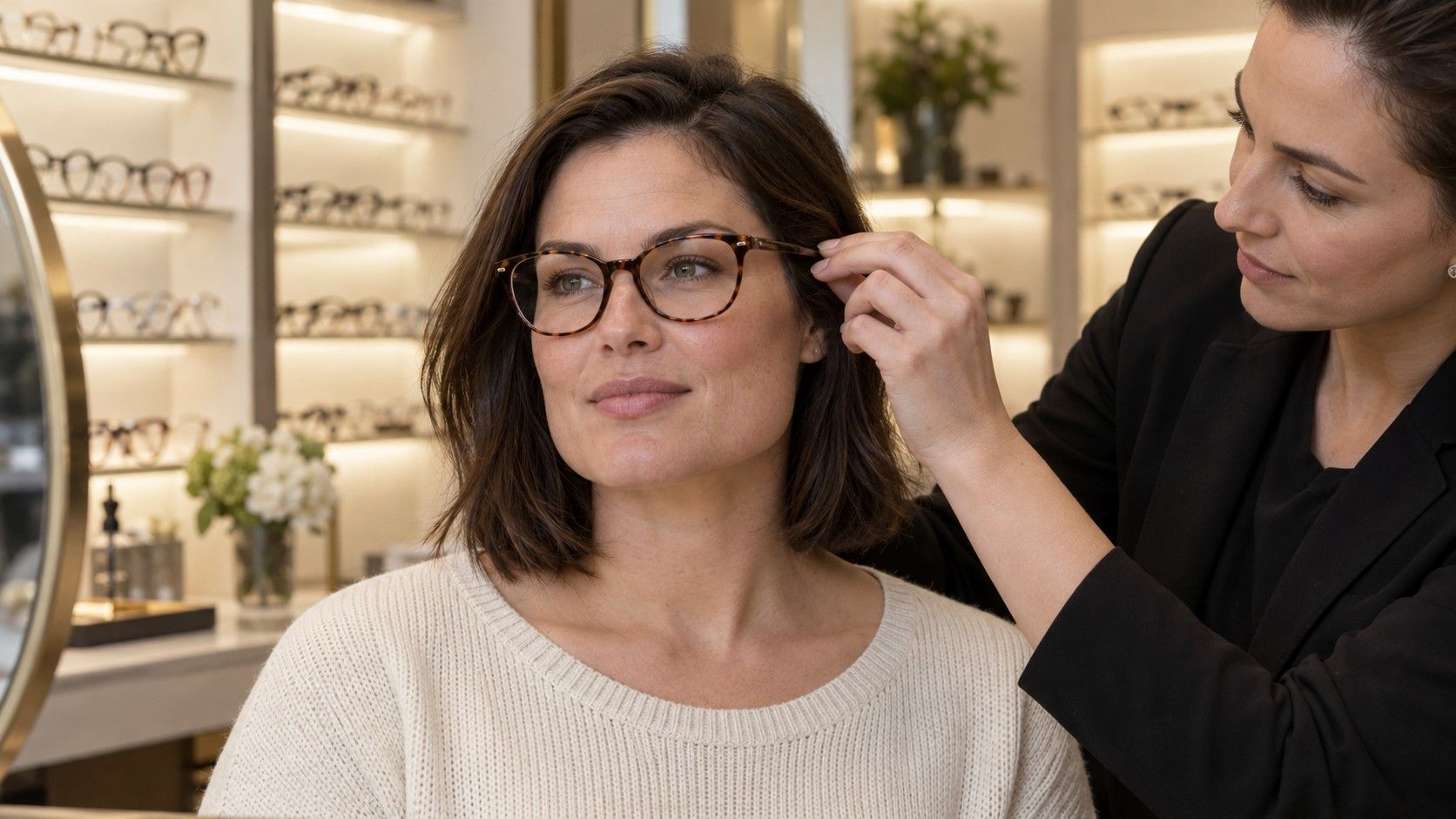
A tray of round frames is a common starting point when you ask for glasses for a square face. Some will suit your taste; others will slide, pinch or touch your cheeks. The useful decision begins with how the frame sits, then moves to the lines you want around your eyes. Your jaw can stay angular while your glasses look rounded, precise, bold or barely visible.
Start with a bridge that stays put
A square face usually has a fairly defined jaw and a similar visual width through the forehead and lower face. That description says little about the nose bridge, the distance between the eyes or the position of the ears. Those details decide whether a pair stays comfortable. Begin with a frame that sits steadily when you look down at a phone. If it slides at once, its attractive outline will become a daily adjustment task.
With a fixed plastic bridge, look for even contact rather than a small pressure point at the top or a gap under most of the bridge. Adjustable pads offer a different way to position the frame, but they still need to suit your nose. Ask the optician to assess the contact and alignment. Moving pads at home to rescue an unsuitable frame can leave the lenses crooked or place more weight on one side.
Next, notice the temples. They should follow the sides of the head without visibly spreading outward from the hinges. A frame that squeezes beside the eyes may be too narrow even if the lens width looks right. A pair that slips is not automatically too wide: the bridge or temple adjustment may be responsible. Have the fit checked before choosing a different size based on one symptom.
Choose the relationship you want between frame and jaw
Round and oval frames introduce curves near an angular jaw. That can make the upper face feel less geometric, but it is a styling effect rather than a requirement. A square frame can repeat the jawline deliberately and look crisp. A softly rectangular pair sits between the two. Glasses for square face proportions work best when the wearer can describe the effect they enjoy instead of trying to erase a feature.
Compare outlines in a similar color and thickness first. A fine wire circle and a heavy black rectangle differ in several ways, so a preference for one tells you little about shape alone. Try a medium oval against a medium rectangle, then compare lighter and heavier versions of the winner. This makes the decision easier to explain to an optician and easier to repeat when shopping later.
Look at the upper corners, too. A slight lift can draw attention toward the temples; a level top line creates a more horizontal impression. Neither effect changes the face itself. If your brows are straight, decide whether you like a frame that echoes them or a curved line beneath them. Keep your usual expression while checking, because raised brows in a mirror can make almost any pair appear more lifted.
Judge width and depth from the front and the side
Check the total front width, not just the number printed inside the arm. Lens width, bridge width, rim thickness and hinge placement all contribute to the size you see. Two frames marked with the same lens measurement can occupy quite different amounts of space. Save the model and measurements of a comfortable existing pair as a starting point, then judge each new frame on your face.
A frame front close to the apparent width of your face is a useful place to begin. From there, try a little narrower and a little wider. If the hinges extend far beyond the temples, ask whether the frame is actually oversized or simply has a projecting design. Compare the side view: broad decorative corners can look restrained head-on while making the pair feel bulky from an angle.
Lens depth changes how much of the cheek area the frame occupies. A deep oval may reach the cheeks when you smile; a shallow rectangle may feel visually quiet but provide less vertical room for the chosen lens design. Square faces can also be long, short or somewhere between. Do not assume that a strong jaw means you need tall lenses, or that a short face must use tiny ones.
Take a normal step back from the mirror and consider the whole head, including hair. Thick side volume can make a modest frame disappear; hair pulled away from the temples can expose every millimeter of the front. Evaluate the pair with the hairstyle you wear most often. A special fitting-room arrangement is a weak basis for something you will put on each morning.
Let the prescription influence the shortlist
Before paying, tell the optician about your prescription and the tasks you use glasses for. Frame suitability can depend on the lens design, the required measurements and how the finished lenses sit. Ask for a realistic account of likely lens thickness and weight in the actual frame you are considering. Display lenses do not show what a prescription pair will feel or look like.
If you use progressive lenses, ask whether the proposed frame has suitable usable depth and how the fitting will be measured. Do not select a very shallow pair solely because a face-shape guide recommends it. For other lens designs, the position of your eyes within the frame still matters. The optician should assess that position while the frame sits naturally, after any necessary fitting adjustments.
Cheek and lash clearance deserve a separate check. Smile, talk and blink without pushing the frame up with your fingers. The bottom rim should not be repeatedly lifted by the cheeks, and eyelashes should not continually brush the lenses. Ask about the intended lens position rather than tilting the arms yourself. A pair that only clears your cheeks when worn low may no longer sit where the fitting measurements expect.
Compare finishes without losing the shape you liked
Once two or three frames fit, change the visual weight. Clear acetate can make a thick rim less conspicuous, while dark acetate gives the same outline a definite edge. Matte texture tends to read differently from polished surfaces under indoor lighting. Hold both beside the face and then put them on; a finish that looks subtle in the hand may catch reflections across the entire brow.
Tortoiseshell patterns, translucent edges and mixed metal fronts can break up a strong horizontal line. They can also introduce more detail than you want. Compare them against a plain shirt and your everyday outerwear rather than judging under the shop lights alone. The question is whether the frame feels like part of your wardrobe, not whether a color has been assigned to your face category.
Pay attention to maintenance as part of the choice. Notice where fingerprints show, whether you can handle the temples easily and whether the decorative corners catch your hair. Ask the retailer about adjustments, replacement parts and care instructions for that particular material. Comfort includes the small actions repeated during a day: taking glasses off, cleaning them and setting them down safely.
Use consistent photos to make the final choice
Photograph the shortlist from the same distance, at eye level, with the camera centered. Use a front view and a three-quarter view in even light. Keep the lens and camera settings consistent; a close wide-angle selfie can change the apparent relationship between the nose, frame and jaw. A short video of smiling and turning is useful for seeing movement that a carefully posed photo hides.
Compare each pair against three concrete questions: does it stay stable, does it sit comfortably, and do you like the line it makes? Then add any task-specific needs such as a headset, reading position or daily commute. If a frame presses behind the ears when worn with headphones, bring those headphones to the fitting. A short test with the real accessory is more useful than guessing.
When searching for eyeglasses, square face shape labels can help you assemble a varied first tray. Stop using the label once it starts excluding a pair you like that fits well. Save your final front and side photos with the model details. After the finished lenses arrive, have the fit checked again and spend time looking through them before leaving the store. The final pair should earn its place through everyday use.