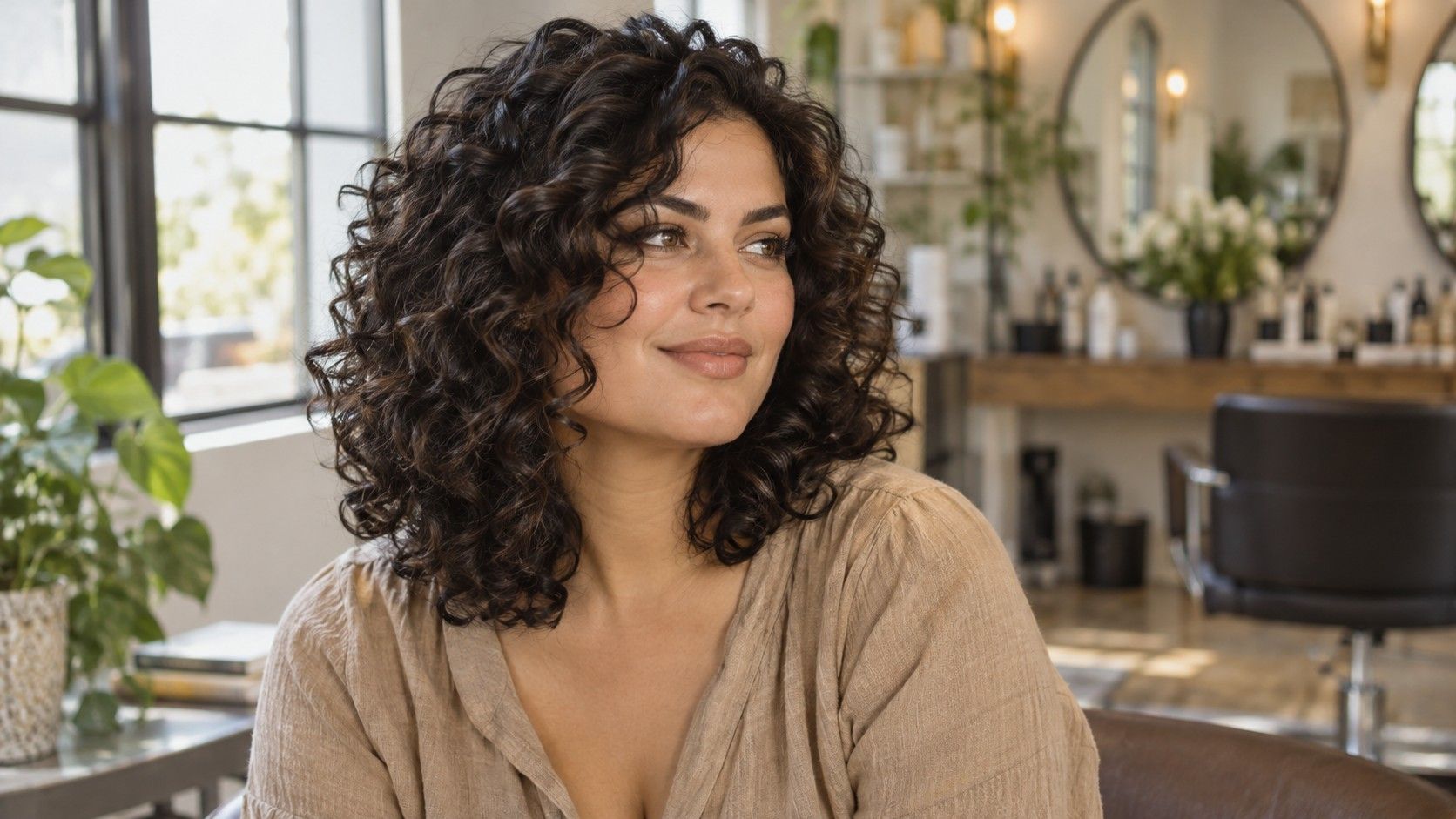
A curly haircut is a moving shape. The same length can sit close to the cheeks on wash day and spread outward after sleep, while a curl cut near the jaw can spring above it when dry. For a square face, the useful starting point is the outline your curls naturally make. Decide where you enjoy their width, which parts of the jaw you want visible and how much reshaping you are willing to do between washes.
Assess the dry silhouette before choosing a length
Look at your hair when it is fully dry and arranged as you normally wear it. Check the front, both sides and the back. Where is the widest point: near the temples, across the cheeks or close to the ends? That location can matter more than the total length. A broad lower shape may echo a strong jaw, while fullness higher up creates a different frame. Both can be intentional.
Take photographs on more than one ordinary day. Include a fresh wash and a later day when the roots have settled or the sides have expanded. Keep the camera at eye level and far enough away to avoid a distorted close selfie. These pictures give a stylist better information than one unusually polished photograph taken after a special routine.
Pull one side loosely behind the ear, then release it. This shows how much of your square outline you prefer to expose. Do not stretch the curls flat for the comparison unless that is how you intend to wear them. The goal is to judge your real combination of curl volume, cheek width and jaw line, rather than a temporary shape created for the mirror.
Place layers according to where the curls land
Layers remove weight and allow shorter sections to occupy different positions in the silhouette. They do not always make curls smaller or less wide. A shorter section can spring up and expand, which may be exactly what you want at the crown and less welcome beside the cheek. Ask the stylist to describe the expected dry landing place of the shortest layers.
For a front curl, compare a position near the cheekbone with one near or below the jaw. A cheek level curl draws attention higher; a longer curl can cross the jaw or sit beneath it. If you want an open jaw, you might prefer a shorter front or a section that tucks away. If you enjoy a full frame, keeping more curl around the jaw may suit that aim.
Be cautious about requesting “lots of layers” without discussing the perimeter. The ends can lose density if too much length is removed from the upper sections, particularly where your curl pattern is looser or the hair is finer. Ask how the stylist will keep the lower outline substantial while creating movement above it. A small adjustment can be more useful than a dramatic change throughout the head.
Test the front in the positions you use during the week. A curl that looks balanced loose may fall across your glasses or escape a work clip. Let the stylist know whether you need every section secured for exercise. This does not eliminate shorter layers, but it helps set a minimum practical length before the cutting begins.
Compare width at the temples, cheeks and crown
Square face curly hairstyles can use side volume rather than treating it as something to remove. Fullness at the temples can balance a broad jaw in one person and create more width than another person enjoys. Your face length and forehead proportions change the comparison. Try lifting the roots gently at the crown and then letting them settle to see whether a taller outline appeals to you.
Volume can come from the cut, the parting or the styling method. Before shortening the crown to gain lift, ask whether changing the part or drying the roots differently could provide enough movement. A shorter crown may be difficult to tie back and can sit much higher after a humid day. Distinguish a temporary styling experiment from a permanent cutting decision.
If the lower section feels heavy, identify exactly where it gathers. Hair behind the ears may need a different adjustment from the front curls. Removing weight everywhere can leave the top too airy while the original problem remains. Use a mirror or photograph to point to the area you mean, and describe whether you want less width, more separation or a rounder perimeter.
A perfectly symmetrical outline may not be realistic or desirable with an asymmetric growth pattern. One side can have tighter curls, a different parting direction or more density. Ask for a balanced dry shape rather than equal stretched measurements alone. A natural difference between sides need not become a reason to keep shortening the fuller one indefinitely.
Allow for shrinkage without using a fixed formula
There is no single amount of shrinkage that applies to every curl on a head. Water, styling, tension and the individual pattern all affect the visible length. Show the stylist where you want the hair to sit when dry, then discuss how they will allow for movement. A wet section held straight should not be treated as a complete preview of the result.
Front curls deserve particular caution because a small change is very visible near the eyes and jaw. If you are trying a curly fringe or short face frame for the first time, a longer initial version leaves room for adjustment. Ask for the final position to be checked after the hair has dried in your intended texture. Further shortening can happen once the spring is clear.
Many people have several patterns across the head. A looser section near the nape may hang below tighter curls above it, while a finer front section may behave differently again. Explain which areas usually surprise you after washing. The stylist can consider those differences rather than assuming a photograph of one curl represents the whole haircut.
Arrive in the condition requested by the salon and describe any products or stretching methods you used. If your hair is in braids, a bun or a straightened state, bring photographs showing its ordinary dry shape. Agree whether the haircut is primarily intended for natural curls, occasional straight styling or both, because an outline optimized for one finish may behave differently in the other.
Refresh the shape before deciding it needs recutting
A flattened side after sleep is not always a cutting problem. Try refreshing the affected curl groups or roots using the method your stylist recommends. You may need only a small amount of water or product rather than a complete wash. Keep the first attempt simple so you can tell which step actually helps the shape return.
If you diffuse, follow the appliance instructions and use a comfortable setting. Moving the dryer repeatedly through partly set curls can change the finish; so can handling the hair before it has dried. Ask for a demonstration suited to your routine, including how the roots are positioned. A salon finish that uses unfamiliar steps may be difficult to reproduce without an explanation.
Heavy product can pull a fine curl pattern downward, while too little hold may leave the outline expanding sooner than you want. The right amount depends on your hair and preferred finish, so avoid treating another person’s routine as a recipe. Change one part of your process at a time and judge the fully dry result. Otherwise a useful haircut can get blamed for several simultaneous styling changes.
Give the next appointment specific evidence
After the first home wash, note where the curls land, which sections feel heavy and what happens when you tuck or tie them. Compare this with the photographs taken before the cut. If the jaw feels too covered, identify the particular front curl responsible. If the crown feels too high, show its dry position rather than asking for the whole haircut to be flatter.
Ask which parts are likely to need reshaping first as the hair grows. The fringe, crown and lower perimeter may change at different rates visually even though the hair is growing throughout. A maintenance visit can focus on restoring balance instead of removing the same amount everywhere. Your desired length and willingness to style should guide that choice.
The most useful curly hair square face approach is an ongoing comparison of the dry silhouette with your preferences. You can keep a visible angular jaw, a generous curl frame or a mixture that changes with the part. Choose the layers and routine that make those options practical. The shape of your curls is material to work with, rather than an obstacle to a supposedly correct face outline.